
There was a point late in the 2026 college baseball season when Oklahoma looked much more like a team fighting simply to make the NCAA Tournament than one preparing to hoist a national championship trophy in Omaha. Here is how Oklahoma overcame the odds to win the 2026 College World Series.
The Sooners had lost their final four SEC series. They finished just 14–16 in conference play, landed 11th in the SEC standings and were eliminated in their opening game of the SEC Tournament. Over the final five weeks before Selection Monday, Oklahoma went just 4–9.
Then everything changed.
What followed was one of the most remarkable postseason turnarounds college baseball has seen in years.
Oklahoma caught fire at exactly the right time, survived a wild regional, dominated a nationally seeded opponent on the road in the Super Regionals and rolled through some of the best teams in the country in Omaha before defeating North Carolina in three games to win the 2026 Men’s College World Series.
The Sooners finished the season 43–23, went 11–2 in the NCAA Tournament and captured the third national championship in program history — joining the 1951 and 1994 teams.
But the story of Oklahoma’s championship wasn’t simply that the Sooners won.
It’s how they got there.
The Season Nearly Got Away From Oklahoma
Embed from Getty ImagesOklahoma’s season actually started with plenty of promise.
The Sooners won 17 of their first 20 games, including victories over NCAA Tournament teams Oklahoma State, Arizona State and TCU. But surviving the weekly grind of the SEC proved considerably more difficult.
By the end of the regular season, Oklahoma had lost four consecutive conference series and finished below .500 in SEC play.
That’s hardly the traditional profile of a national champion.
Oklahoma entered the NCAA Tournament as an unseeded team and was sent to Atlanta as the No. 2 seed in a regional hosted by national No. 2 seed Georgia Tech.
If the Sooners were going to reach Omaha, there wasn’t going to be an easy road.
It turned out that was exactly what this team needed.
Atlanta Changed Everything
If there was one moment when Oklahoma’s championship run truly began, it came against Georgia Tech.
After opening the Atlanta Regional with an 8–3 win over The Citadel, Oklahoma fell 9–3 to Georgia Tech and was pushed into the loser’s bracket.
The Sooners responded by beating The Citadel 15–5 and earning another chance against the Yellow Jackets.
Then they found themselves in an 8–2 hole.
With their season on the verge of ending, Oklahoma suddenly turned into a different baseball team.
The Sooners stormed back for a 15–8 victory, forcing a decisive regional championship game against one of the best teams in the country.
That game wasn’t much easier.
Georgia Tech built a 7–3 lead, but Oklahoma kept answering. The Sooners scored twice in the seventh, once in the eighth and again in the ninth to force extra innings.
Then Dayton Tockey provided one of the defining moments of Oklahoma’s season.
Tockey launched a walk-off home run in the 10th inning, giving the Sooners an 8–7 victory and sending them to the Super Regionals.
Oklahoma had been staring at elimination twice against the No. 2 national seed.
Instead, the Sooners were still alive.
And they weren’t going to slow down.
From Surviving to Dominating
Oklahoma’s trip to the Lawrence Super Regional presented another challenge: No. 15 national seed Kansas on its home field.
This time there was very little drama.
The Sooners overwhelmed the Jayhawks.
Freshman pitcher Cord Rager helped Oklahoma take Game 1 with six strong innings in an 8–1 win. Home runs from Tockey, Camden Johnson and Trey Gambill provided more than enough offense.
Game 2 was even more convincing.
Oklahoma jumped on Kansas early and eventually finished off a 13–2 victory, sweeping the Super Regional while outscoring the Jayhawks 21–3.
The Sooners had officially transformed from a team desperately trying to survive into one of the hottest teams in college baseball.
They were going to Omaha.
Freshman Pitching Changed the Ceiling
Perhaps nothing defined Oklahoma’s championship run better than what Skip Johnson was willing to ask from his young pitching staff.
The Sooners became the first program in College World Series history to reach the championship round — and eventually win the national title — while starting a freshman pitcher in every game.
Cord Rager, Xander Mercurius and Nick Wesloski were suddenly being asked to handle the pressure of college baseball’s biggest stage.
They didn’t just survive it.
They excelled.
The three freshmen combined for 37 strikeouts in 31.1 innings over six starts in Omaha.
Oklahoma’s team ERA had been 4.91 over the entire season. During the NCAA Tournament, it dropped to 3.31.
In the College World Series?
Just 2.67.
Rager immediately set the tone in Omaha by throwing seven shutout innings with eight strikeouts as Oklahoma dismantled No. 7 Alabama 9–0.
Mercurius followed with 7.1 strong innings and nine strikeouts in a 4–3 victory over No. 3 Georgia.
Then Wesloski helped Oklahoma finish the Bulldogs off in an 11–4 semifinal victory that sent the Sooners into the championship series.
Young pitchers are supposed to be overwhelmed by Omaha.
Oklahoma’s weren’t.
The Offense Became a Different Animal
The pitching was only part of the transformation.
Oklahoma’s offense exploded once the postseason began.
During the regular season, the Sooners were a good offensive team. During the NCAA Tournament, they became devastating.
Oklahoma hit 48 home runs over its first 46 games of the season.
Over its final 19?
The Sooners hit 47.
Oklahoma batted .331 during the NCAA Tournament while averaging 9.1 runs and 12 hits per game.
Deiten LaChance emerged as one of the biggest threats in the lineup. Dasan Harris became a postseason difference-maker. Jason Walk delivered timely power. Tockey gave Oklahoma its unforgettable regional moment.
And then there was Jaxon Willits.
Willits saved some of his best baseball for Omaha, setting an Oklahoma College World Series record with 13 hits and eventually earning Most Outstanding Player honors.
By the time the Sooners reached North Carolina in the championship series, Oklahoma wasn’t playing like an underdog anymore.
It was playing like the best team in the country.
Oklahoma Answers North Carolina’s Challenge
The championship series against No. 5 North Carolina began exactly the way Oklahoma wanted.
The Sooners pounded out 14 hits in a 9–3 Game 1 victory, with LaChance blasting two home runs while Harris added three hits.
Suddenly, Oklahoma was one win away from a championship.
North Carolina wasn’t going away quietly.
The Tar Heels responded with a 6–2 victory in Game 2, setting up the scenario every baseball fan wants in Omaha:
One game for the national championship.
If Oklahoma was feeling the pressure, it certainly didn’t show.
One Last Statement
Winner-take-all championship games are supposed to be tense.
Oklahoma turned this one into a celebration.
The Sooners scored in five consecutive innings after a scoreless first, breaking the game open and eventually crushing North Carolina 13–2.
Kyle Branch delivered the performance of his life, finishing 3-for-4 with a home run and six RBIs. Willits went 3-for-4, reached base five times and drove in two runs.
Harris delivered one of the game’s most important defensive plays early when he threw out a North Carolina runner attempting to advance to third before another runner could cross home plate, preserving Oklahoma’s 2–0 advantage.
Then LJ Mercurius took control on the mound.
Mercurius entered in the third inning and delivered 5.2 innings of relief, allowing just one run on four hits and keeping North Carolina from ever seriously threatening Oklahoma’s growing lead.
By the time Jackson Cleveland recorded the final strike, the comeback was complete.
Oklahoma 13.
North Carolina 2.
National champions.
One of the Toughest Championship Paths You’ll Find
Look at the list of teams Oklahoma had to eliminate and the magnitude of the run becomes even clearer.
The Sooners defeated:
- No. 2 national seed Georgia Tech
- No. 15 national seed Kansas
- No. 7 national seed Alabama
- No. 3 national seed Georgia
- No. 5 national seed North Carolina
Oklahoma earned nine victories against nationally seeded teams during its championship run, the most by any team since national seeding began in 1999.
Georgia Tech won the ACC regular-season and tournament championships. Kansas won the Big 12 regular-season and tournament titles. Georgia did the same in the SEC.
Oklahoma beat all three.
This wasn’t a fortunate bracket breaking the right way.
The Sooners went through the heavyweights.
From 11th in the SEC to No. 1 in the Country
That’s ultimately what makes Oklahoma’s 2026 championship so memorable.
This team had every opportunity to fold.
The Sooners struggled down the stretch. They finished 11th in their own conference. They lost their opening SEC Tournament game. They fell into the loser’s bracket during regionals. They trailed Georgia Tech by six runs with their season at stake. They were forced into a winner-take-all Game 3 in the national championship series.
Every time Oklahoma was pushed toward the edge, it responded.
Skip Johnson, later named the 2026 National Coach of the Year, found the right combination at exactly the right time. His freshman pitchers grew up quickly. His offense found another gear. Players throughout the lineup produced championship moments.
There might have been more dominant teams during the 2026 regular season.
There were certainly teams that entered the NCAA Tournament with better records, higher rankings and easier paths to Omaha.
But when college baseball’s championship was finally decided, there was only one team left standing.
Thirty-two years after Oklahoma last won the College World Series, the Sooners are national champions again.
And considering everything they had to overcome to get there, the 2026 Oklahoma Sooners won’t simply be remembered for winning the College World Series.
They’ll be remembered for refusing to let their season end.
ABOUT THE AUTHOR
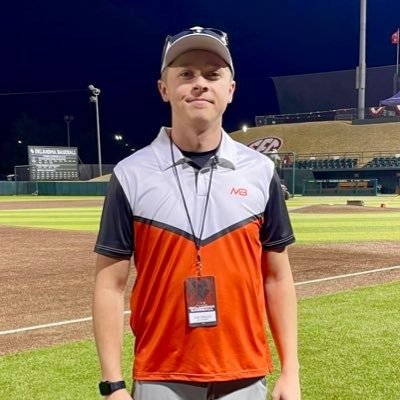
Josh Mahler
Editor/Founder | Game Day Collective
@realJoshMahler
